
Sub-Total: $0.00
Designing relationships for databases

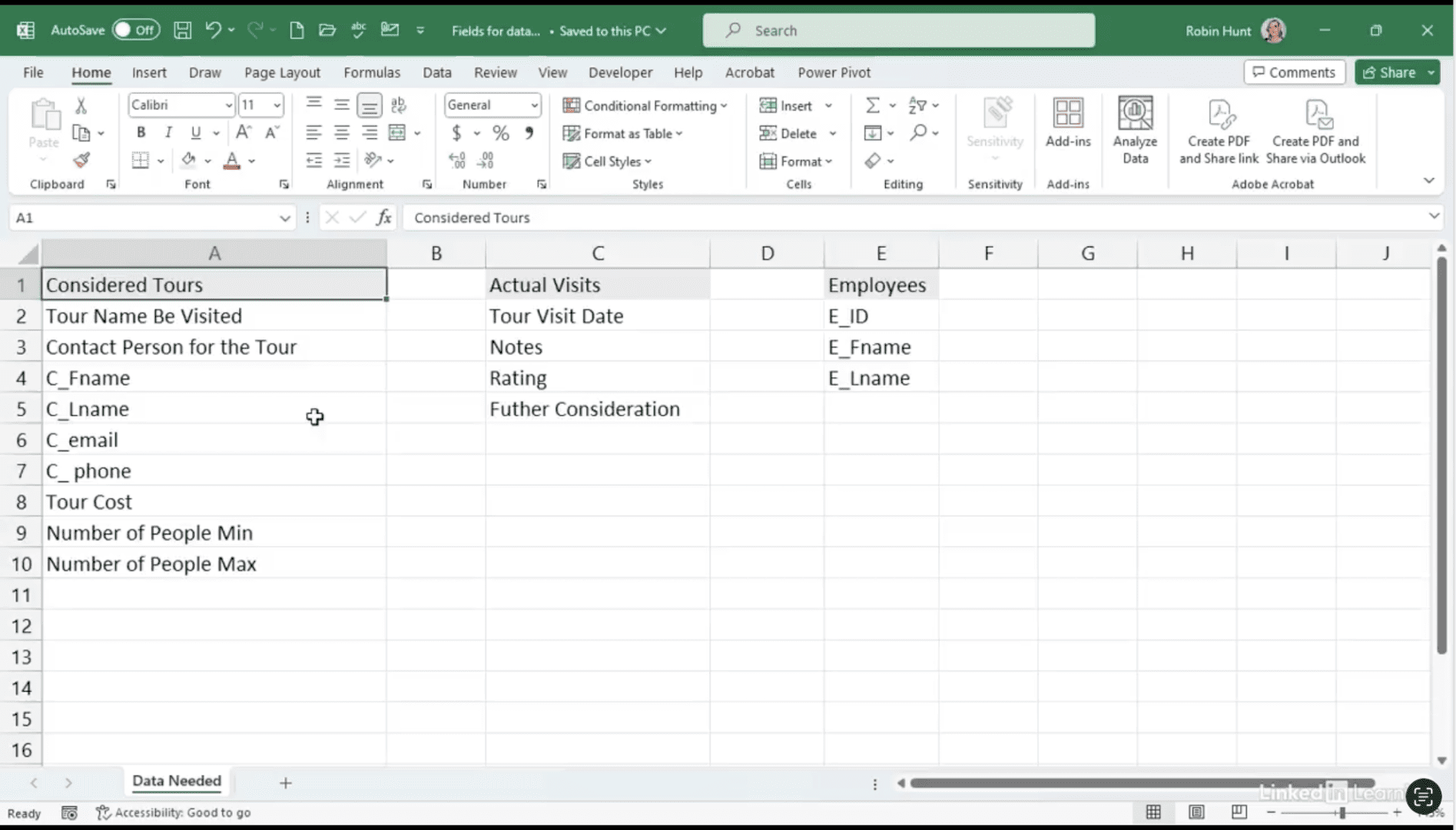
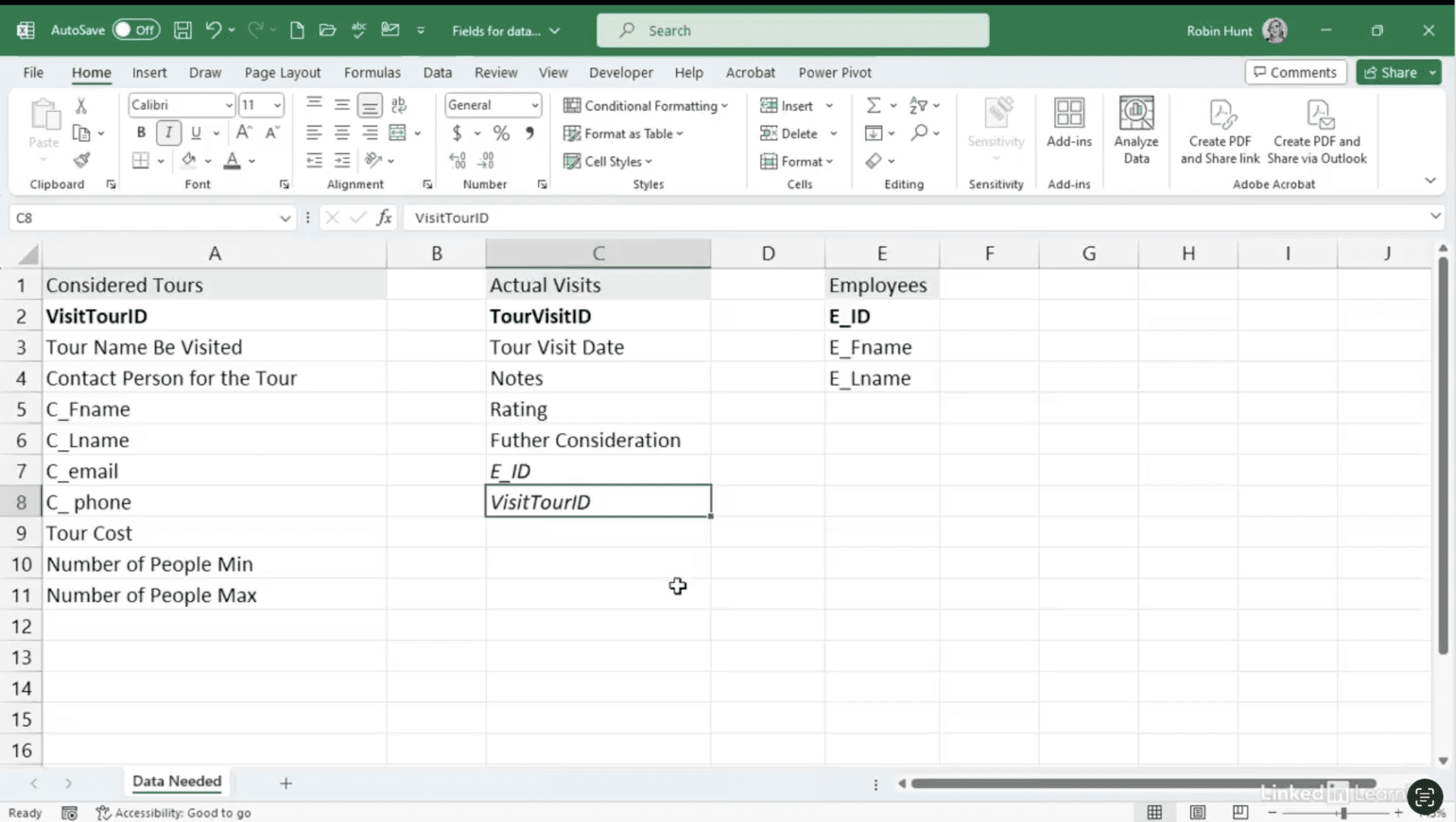
Learn how to design structured database relationships that turn messy information into reliable insights. In this Data Survival Skills session, Robin shows how Explore California organizes potential tour data by moving from unstructured notes and spreadsheets into a relational database model. Using primary keys, foreign keys, and one-to-many relationships, she demonstrates how to normalize data around employees, tours, and visits. The result is a clean, scalable database design that enforces data integrity and makes reporting easier across any platform—from Access to enterprise-level SQL systems.
#DatabaseDesign #DataModeling #RelationalDatabases #Normalization #SQL #Access #Excel #DataIntegrity #BusinessIntelligence #DataAnalysis
If you’re a data analyst, you’ve no doubt learned different skills, techniques, and tools pertaining to data. But sometimes it can be difficult to know when and why to apply these tools. In this weekly series, instructor Robin Hunt explains a new skill, secret, tip, technique, best practice, or golden piece of advice in each installment. Robin covers topics that can help you do your job better, such as joining data and data designs, privacy for data, transforming and cleaning data, and making data sets and visualizing data.
Note: Because this is an ongoing series, viewers will not receive a certificate of completion.